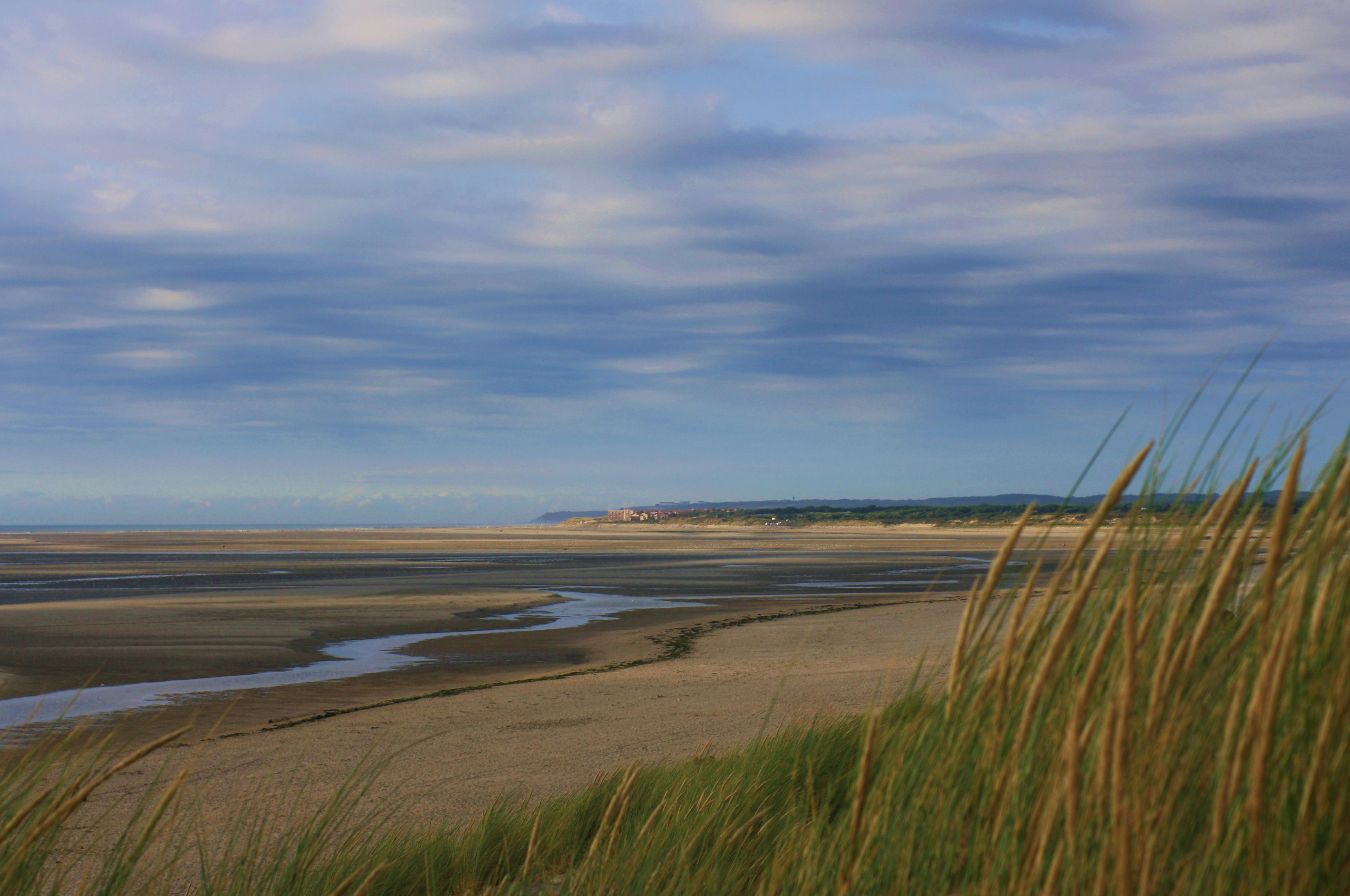
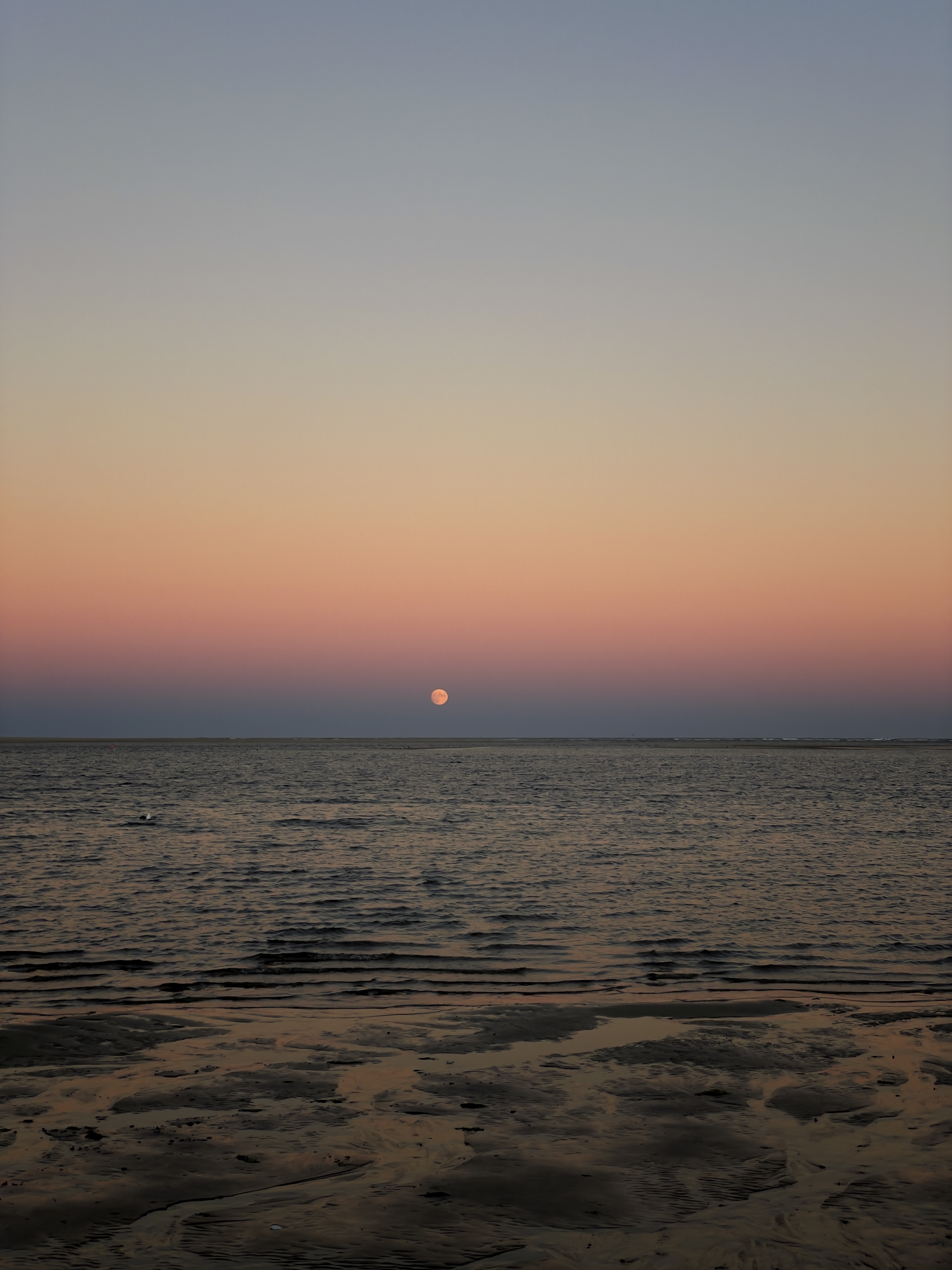
From a beach, the tide is impossible to miss. Water climbs the sand, lifts boats against their lines, fills marshes, and then slowly pulls away again. Far out in the open ocean, the same forces are at work, but the rhythm can become so subtle that a boat may cross one of its quietest places without anyone aboard noticing.
That sounds like still water. It is anything but. The ocean is moving across an entire basin, shaped by the Moon, the Sun, Earth’s rotation, continents, and the hidden terrain of the seafloor. In a few remarkable places, that enormous motion turns around a center where part of the tide nearly disappears.
The ocean has quiet centers
These places are called amphidromic points. NOAA defines an amphidromic point as a location where the amplitude of an observed tide, or one of its individual components, reaches zero.
The easiest way to picture one is as the quiet center of a vast, slow rotation. Across an ocean basin, the crest of a tidal wave arrives at different places at different times. Map those times, and the pattern can look like the hands of a clock sweeping around a central point. Close to that center, the vertical rise and fall is tiny. Move farther away, and the same tidal component generally becomes more pronounced.
There is no marker floating above an amphidromic point. The sea does not suddenly become glassy, and a sailor would not cross a visible boundary. It is a hidden piece of planetary geometry, one we can understand only by watching the ocean across enormous distances.
The tide does not travel alone
The familiar high and low tide is really the sum of many repeating rhythms. The Moon provides the strongest tide-generating force, while the Sun adds its own influence. Their cycles can be separated into tidal constituents, each with its own timing, amplitude, and map across the ocean.
This is why “no tide” is too simple. At an amphidromic point, one constituent may produce almost no rise and fall even while other constituents still raise and lower the surface. Wind, atmospheric pressure, waves, and broad ocean circulation continue to shape the water too. The quiet is real, but wonderfully specific.
Even the familiar picture of two tidal bulges circling a smooth Earth is only the beginning. As NASA’s tide science explains, real tides are altered by continents, ocean depth, and the shape of the planet. Every ocean basin turns the same astronomical pull into its own rhythm.
Why the ocean turns
Tides are extremely long waves. They meet continents, reflect through basins, slow or speed as depth changes, lose energy to friction, and respond to the shape of shelves, ridges, bays, and channels. Earth’s rotation adds the Coriolis effect, which deflects moving water and helps organize these basin-wide patterns into rotating systems.
That is very different from saying the Coriolis effect simply weakens the tide. It helps decide where the tide is large, where it is small, and when high water arrives. Basin geometry and resonance matter too. A coast, bay, or estuary can gather and amplify tidal motion, while another part of the same system sits close to a quiet node. NOAA’s tide guide describes amphidromic areas in the open ocean, including a well-known region near Tahiti.
This is why neighboring coastlines can have remarkably different tides, and why depth alone never tells the whole story. The ocean is not a single wave marching evenly around the globe. It is a collection of connected basins, each one rocking, turning, and keeping time in its own way.
Quiet does not mean still
A small change in surface height does not mean the water has stopped moving. Water can still flow horizontally around a tidal node. Other currents and surface waves pass through. Below, tidal energy can meet a ridge, seamount, or continental slope and send waves through the ocean’s interior.
These hidden waves are called internal tides. NASA visualizations show them radiating away from places such as the Hawaiian Ridge, where tidal currents encounter steep underwater terrain. They are a beautiful reminder that some of the ocean’s most energetic motion can happen far below a surface that looks almost unchanged.
Space revealed the whole pattern
For most of human history, our understanding of tides came from the shore. That is where the change was visible and where careful records could be kept. The middle of the ocean left enormous blank spaces between those observations.
Satellite altimetry changed the view. By measuring sea-surface height across the planet, scientists built global models that reveal tidal crests sweeping around amphidromic points. On NASA’s global tide map, the ocean seems to breathe and turn at once, with quiet centers anchoring patterns that span thousands of miles.
There is something wonderful about how clearly the design comes into view from space. From the shore, a tide feels intensely local: a rock disappears, a harbor fills, a sandbar returns. From above, every one of those moments belongs to a much larger motion.
Every coast keeps its own time
This is one of our favorite things about tide science. The Moon and Sun reach across the whole planet, but the result is never generic. The exact tide at any beach or harbor belongs to that place, shaped by the basin beyond it and the coastline beneath your feet.
Somewhere beyond the horizon, one of those rhythms may be circling a point where its rise and fall nearly vanishes. Nothing marks the spot. The water keeps moving, the wind keeps crossing it, and the ocean keeps all its other rhythms. Yet beneath that apparent sameness is a quiet center, holding its place while the tide turns around it.